The theory of market equilibrium states that the exact point on a graph where demand and supply cross one another is where quantity demanded equals quantity supplied, and the market is said to be in a state of “equilibrium”.
In a perfectly competitive market, equilibrium is often portrayed as being achieved seamlessly. However, in reality, a range of factors prevent markets from reaching equilibrium instantaneously. Prices and quantities undergo continuous adjustments, until demand and supply converge. At this point the consumers and producers are satisfied, at least for the time being.
The dynamics of disequilibrium and the subsequent adjustments are not confined to economic markets alone. Similar patterns can be observed in political and legislative systems where competing interests, public sentiments and institutional responses continuously alter the status quo.
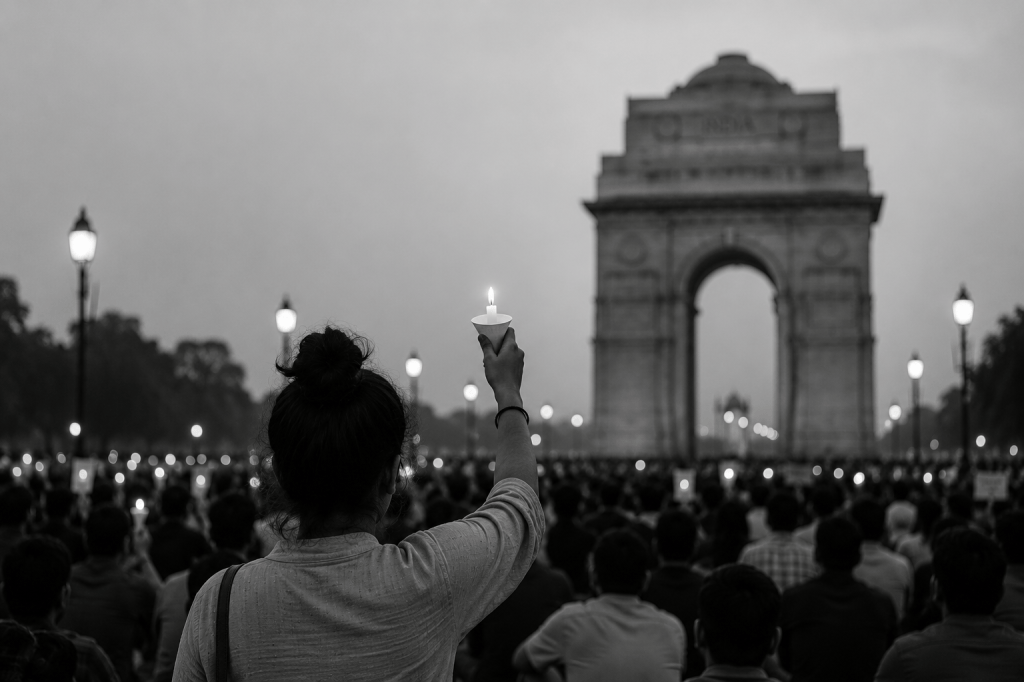
The recent student protests, popularly called the Gen Z or Cockroach protests, illustrate this process. They emerged from an imbalance in the public demands and expectations on the one hand and the government policy and approach on the other. The movement towards a new equilibrium began with protests which were launched on June 6, 2026, at the Jantar Mantar, New Delhi- by far the most favored site for protests in India.
It was initiated by the Cockroach Janta Party (CJP)- a satirical political movement which emerged in response to the Chief Justice of India Surya Kant’s statement, comparing unemployed Indian youth and social media activists to “cockroaches” and “parasites”.
The call by Abhijit Dipke-the founder of the movement- for all “cockroaches” to come together was met with an overwhelming response. Within the first week of its debut on Instagram, the CJP’s official page amassed 22 million followers. The movement went viral in no time and in true “Gen Z” fashion, its supporters flooded the internet with memes and reels- the digital equivalent of political cartoons and satirical columns that once dominated the newspapers.
Dipke announced the protest’s agenda and mobilization plan through the CJP’s official Instagram account. While conventional protest movement typically rely on a defined set of leaders and spokespersons, the CJP’s organizational structure reflected a social media age. Its ranks included social media managers, photographers, videographers and content-creators, who ensured that not only was the movement documented but that it reached millions online.
The protestors were clear and unrelenting with their demands- an overhaul of the education system, compensation for the families of the NEET aspirants who died by suicide and increased political and bureaucratic accountability, starting with the resignation of Union Education Minister Dharmendra Pradhan.
The protest took a distinctively Gandhian turn, with the arrival and participation of Sonam Wangchuck- veteran Ladakhi activist and educationist. He announced an indefinite hunger strike, vowing to continue the fast until the protestor’s demands were met. After fasting for more than 3 weeks, he was moved from his spot at the protest site and taken by the Delhi police to the Safdarjung hospital on 18th July 2026. The move drew widespread criticism and condemnation, with supporters alleging that he was moved without his will.
Two days later, on 20th July- the opening day of the Parliament’s monsoon session- the protest entered a new phase. Tens of thousands of protestors converged on the streets of the national capital, marching towards the Parliament.
They braved the Delhi rain and humidity with humor, satire, internet slang, memes and pop-culture references and did not back down. The “vibe” of the protest was unlike anything seen in past such uprisings. The movement spoke the language of a generation raised online. Humorous placards, witty one-liners, parody songs, catchy slogans, replaced the conventional protest imagery. Each day of the protest and each rally doubled as an opportunity for content creation which resonated with those following the protests online.
Despite lathi charges, water cannons, tear gas shelling and threat of police detention and filing of FIR’s, the protestors endured it all in the way they know best- with a smile on their face and determination in their eyes. On the evening of 25th July, Dharmendra Pradhan tendered his resignation, bringing a measure of equilibrium between the protestor’s demands and the government’s response.
Whether this resignation marks the end of the movement or the beginning of a broader conversation remains to be seen.
JULY 29, 2026


Leave a Reply